

Last Updated on January 10, 2026 by courtnews reporter
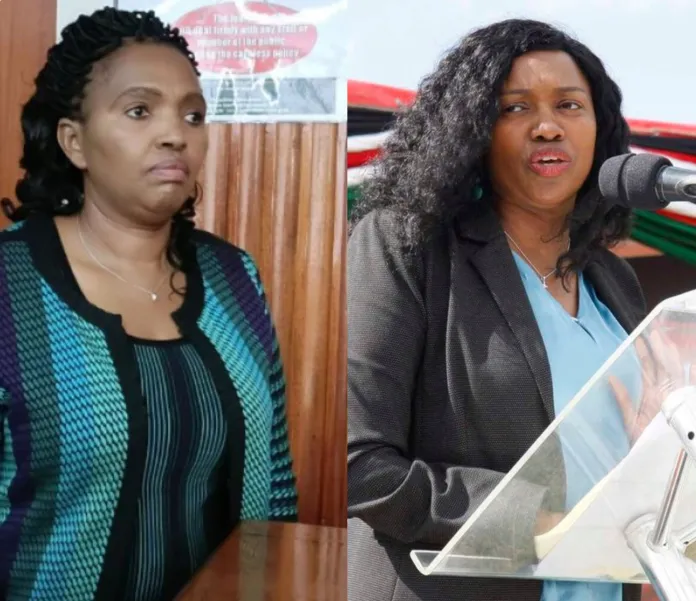
The simmering political rivalry between Nakuru Governor Susan Kihika and Nakuru Senator Tabitha Karanja now appears headed for the courts after the governor issued a formal demand threatening legal action over alleged defamatory remarks.
Through her lawyer, Senior Counsel Ahmednasir Abdullahi, Governor Kihika has given Senator Karanja seven days to issue an apology, retract the statements, and admit liability—failure to which she will institute a defamation suit.
Seven-Day Ultimatum Issued
In a strongly worded demand letter, Kihika insists that the senator immediately and unconditionally withdraw remarks allegedly made on December 21, 2025, which the governor describes as false, malicious, and defamatory.
The letter further demands:
-
A public apology with the same prominence as the original statements
-
A public admission that the remarks were motivated by malice
-
A written undertaking not to repeat or endorse similar allegations in the future
“Take notice that should you fail to comply within seven days of the date hereof, we shall proceed to pursue all appropriate legal and constitutional remedies without further reference to you,” the letter states.
These remedies include civil defamation proceedings, claims for general, aggravated, and exemplary damages, injunctive relief, and any other relief the court may deem fit.
Allegations Made During Church Service
According to the demand letter, Senator Karanja allegedly made the contested remarks during a church service in Nakuru, where she implied that a family-owned business linked to Governor Kihika posed a national security risk due to its proximity to State House.
The senator is also accused of falsely alleging that the governor misappropriated Nakuru County funds to construct a family-owned hotel allegedly worth billions of shillings, purportedly built on public land.
Governor Denies Corruption and Abuse of Office
Kihika has categorically denied the allegations, stating that they falsely portrayed her as corrupt, abusive of public office, and reckless on matters of national security.
“These statements have scandalised our client by imputing corruption and abuse of office, thereby lowering her estimation in the eyes of right-thinking members of society in Nakuru County, Kenya at large, and internationally,” the letter reads.
Ahmednasir argues that the remarks are defamatory per se under the arbitrium boni viri principle—the standard applied by an ordinary and reasonable person—and that they have exposed the governor to ridicule, contempt, and public hatred.
Claims of Malice and Political Motive
The demand letter further accuses Senator Karanja of acting with “naked malice, ill-will and spite,” arguing that the allegations were made without any factual basis.
“Reckless public allegations of corruption, unsupported by evidence, do not advance oversight or accountability. Instead, they undermine due process and amount to trial by innuendo,” the letter states.
The governor maintains that the statements were presented as facts, not as questions or calls for investigation, thereby crossing the constitutional boundary between legitimate political discourse and unlawful defamatory speech.
Legal Action Looms
Kihika insists that unless the senator complies with the demands, the matter will proceed to court.
“As a result, our client’s reputation has been gravely injured, lowering her standing in society and disparaging the public office she holds,” the letter concludes.
Kenya Court News Today – Live High Court & DPP Updates click here 👉 /kenya-court-news-today