

Last Updated on November 18, 2025 by courtnews reporter
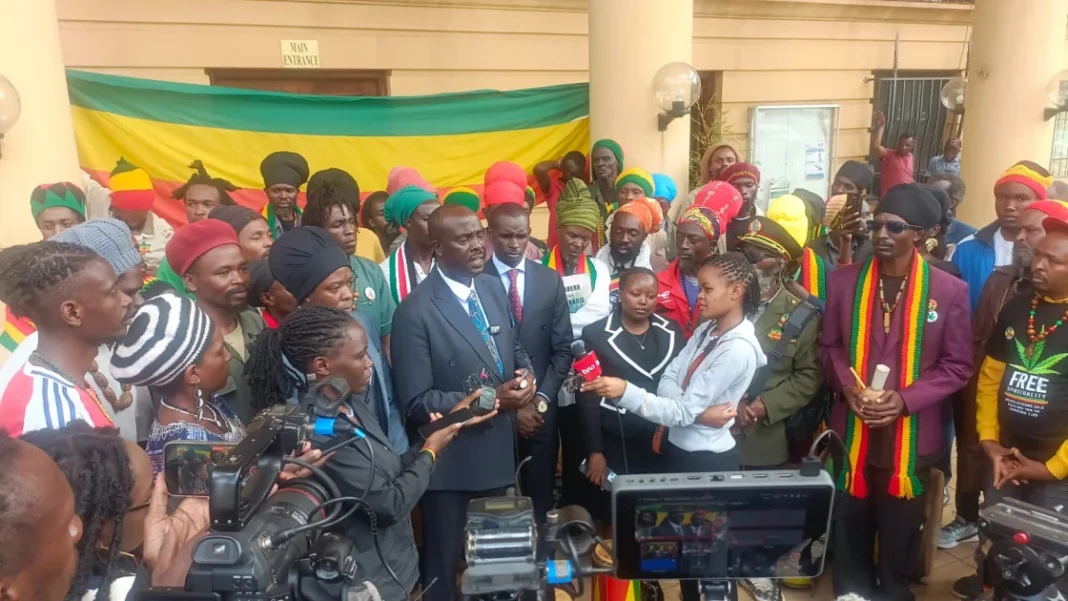
The State has yet to file its response in a constitutional petition by the Rastafari Society of Kenya seeking to legalize the use, possession, and cultivation of cannabis for spiritual and religious purposes.
During Tuesday’s mention, Justice Bahati Mwamuye directed that the case proceeds to a full hearing on January 14 and 15, 2026, regardless of whether the State has responded. The Court noted that the matter raises weighty constitutional questions that cannot be delayed further.
The petitioners, represented by Sheria Mtaani’s Shadrack Wambui and senior counsel Danstan Omari, informed the court they intend to call several witnesses, including religious leaders, cultural experts, and medical specialists, to support their case.
Petitioners Challenge Narcotics Law
At the core of the petition is a request for the High Court to declare Sections 3, 5, and 6 of the Narcotic Drugs and Psychotropic Substances Act, 1994 unconstitutional. According to the Rastafari Society, these provisions criminalize sacramental use of cannabis—referred to in their faith as the “holy herb.”
“These provisions unjustly criminalize religious practices by outlawing the use of cannabis, even in private dwellings or designated tabernacles of worship,” the petition states.
The petitioners argue that the blanket criminalization of cannabis violates:
-
Freedom of religion (Article 32)
-
Equality and non-discrimination (Article 27)
-
Right to dignity (Article 28)
-
Privacy rights (Article 31)
Cannabis as a Religious Sacrament
Court documents detail that cannabis plays a central role in Rastafari spirituality through two main practices:
-
Meditation – Individual rituals involving smoking, drinking, eating or burning cannabis incense.
-
Reasoning sessions – Communal worship held in tabernacles where congregants use the herb to deepen spiritual connection.
According to their lawyers, the law’s criminal penalties—including imprisonment terms of up to 20 years—stigmatize and marginalize Rastafari adherents for practicing elements of their faith.
Petitioners Say Law Is “Outdated”
Wambui and Omari told the court that Kenya’s drug laws remain “archaic” and inconsistent with international developments. They cited the 2020 UN Commission on Narcotic Drugs decision removing cannabis from the list of the most dangerous controlled substances.
They argue that while the Act exempts medical professionals and authorized handlers of narcotics, it provides no protection for religious users, creating discriminatory enforcement against Rastafarians.
Rastafari Society: This Is About Dignity and Equality
The group’s secretary, Brian Mwanza, described the case as a pursuit of religious dignity, respect, and equal treatment under the Constitution. He emphasized that the Rastafari movement in Kenya is rooted in African cultural traditions and global Rastafari principles, with cannabis forming an integral part of their worship identity.
Mwanza further highlighted the community’s long-standing involvement in environmental conservation, including collaborations with the late Prof. Wangari Maathai’s Green Belt Movement, as evidence of Rastafarians’ positive contributions to society.
Respondents
The petition lists two respondents:
-
The Attorney General
-
The Kenya Law Reform Commission
The High Court is expected to hear the case in January 2026, a ruling that could have far-reaching implications for religious rights, Kenya’s drug policy, and the legal status of cannabis.
Kenya Court News Today – Live High Court & DPP Updates click here 👉 /kenya-court-news-today