

Last Updated on October 17, 2025 by courtnews reporter
A Tribute to Baba Raila Odinga’s Final Journey
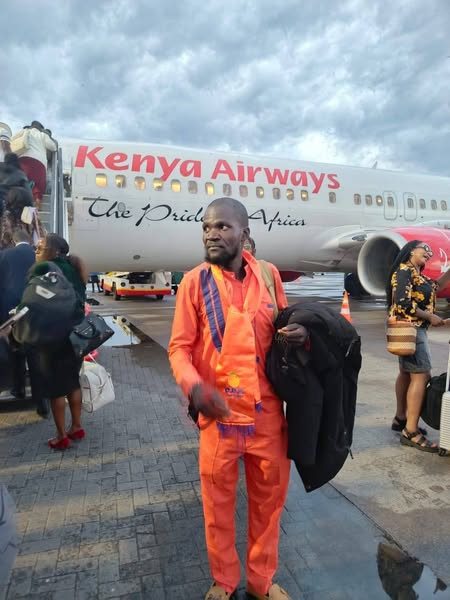
“Flying to Kisumu… my heart is heavy, my soul is shattered. Baba Raila Odinga, I still can’t believe it. I will be receiving you in a coffin — words I never imagined I would ever say. Kenya will never be the same again.”
— Nuru Okanga
The End of an Era
Rarely in a nation’s life does the passing of one individual feel like the closing of a chapter in its own story. Yet, for many Kenyans, the death of Raila Amolo Odinga on October 15, 2025 in India marks exactly such a moment. A towering figure in Kenya’s political landscape for decades, Odinga’s life was bound up with its transformations, its struggles, its hopes.
News came that he collapsed during a morning walk in Kerala, suffering a cardiac arrest. Despite efforts to resuscitate him, the doctors declared him dead. He was 80.
The Weight of Loss
Nuru Okanga’s words echo what many are feeling across the country: disbelief, sorrow, a deep sense of emptiness. “Flying to Kisumu…” — for many, that journey is more than geographic. It is symbolic: a final homage, a pilgrimage to where Raila’s roots lie, to where many of his supporters still look to him as “Baba,” “Nyundo,” a father, a voice for the voiceless.
For those waiting in Kenya, the words receiving you in a coffin are unthinkable. It is something we prepare for in funerals of elders perhaps, but not someone who has been so present: fighting for democracy, contesting elections, voicing dissent, championing reforms. Yet now, that coffin is real. This makes the grief sharper; this makes the silence louder.
A Nation Grieving
Upon confirmation of his death, President William Ruto declared a seven-day period of national mourning, with flags at half-mast across the nation. Public grief erupted in many forms: crowds gathering, tears openly shed, spontaneous vigils, music, prayer. The body was flown from India to Nairobi; thousands converged at Jomo Kenyatta International Airport to receive him.
Kisumu, Odinga’s home county and one of his strongest political support bases, has been bracing for the arrival, for the viewing, for the final farewell. For many, the journey to Kisumu isn’t just political; it is deeply personal. The lake, the homes, the memories of struggle and hope — Odinga’s life was woven into these landscapes.
Legacy and Unfulfilled Dreams
Raila Odinga’s political career spanned uprisings for multiparty democracy, constitutional reform, numerous presidential bids (1997, 2007, 2013, 2017, 2022), service as Prime Minister (2008-2013), leadership of the opposition, and mentorship of younger politicians.
He leaves behind many victories — some small, some large — and many unfulfilled dreams. For many, his death raises questions: Who picks up the mantle? What becomes of the struggle for electoral justice, constitutional integrity, inclusion, and social equity? Kenyans from all walks are wondering how the political landscape will shift without “Baba”.
The Emotional Journey to Kisumu
For people like Nuru Okanga, and countless others, travelling to Kisumu to pay last respects is not only an act of mourning but of reckoning. In the solemn atmosphere of a coffin procession, heartrending farewells, landscapes dimmed by grief, memories magnify.
Kisumu will host a public viewing; voices will crack under emotion, drums may beat in tribute, prayers will be said at the lake’s edge. For political rivals and allies alike, this is a moment to reflect on what was, what could have been, and what remains.
Kenya Will Never Be the Same
These words — Kenya will never be the same again — capture both fear and hope. Fear, because the passing of a dominant political figure leaves a vacuum: in leadership, in unity, in moral clarity. Hope, because in every ending there lies possibility: for new voices, for new directions, for fresh dreams that carry forward the ideals Odinga fought for.
Odinga’s death is a call: to mourn deeply, yes — but to also remember what he stood for. Democracy, social justice, devolution, freedom of speech, electoral reform. These are not his alone. They are Kenya’s. And they must carry on.
A Promise to Remember
As the country travels this emotional road — from Nairobi to Kisumu, from disbelief to resolution — it makes a promise: to remember.
To remember Raila Odinga not only for the battles he lost, but for those he won; not only for the times he stood firm, but for his willingness to speak truth. To remember the people he inspired, the lives he touched, the hopes he kindled.
Flying to Kisumu is both a farewell and a gathering of mourners, of legacy-bearers, of people who believe that though Baba has passed on, the flame he carried must not extinguish. It must light the way forward.
Conclusion
So, in the tears, the songs of mourning, the prayers, the speeches, and the silence — we see a nation trying to accept that “receiving you in a coffin” is real. But though Odinga’s journey has ended, his impact remains inscribed in Kenya’s institutions, its people, its hope for a fairer tomorrow.
As Kenyans embark on this journey to Kisumu, let the sorrow lead to solidarity, the grief to growth, and the passing of a leader to the birth of renewed commitment. Because though Kenya will never be the same again, perhaps in this moment of loss, she may become more of what Odinga envisioned: just, democratic, inclusive.
Kenya Court News Today – Live High Court & DPP Updates click here 👉 /kenya-court-news-today