PORT OF SHAME: HOW MOHA JICHO PEVU’S INNER CIRCLE GOT TRAPPED IN A SH43.5 MILLION KPA DEBT SCANDAL

Last Updated on June 25, 2026 by Joao Pedro
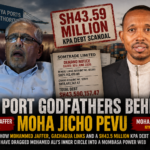
Nyali MP Mohamed Ali, the man who built a political brand by shouting about corruption, impunity and state theft, is now staring at a scandal that cuts dangerously close to home after documents linked to a company tied to his inner circle placed his camp at the centre of a Sh43.59 million debt demand by the Kenya Ports Authority.
This is not a story about a stranger.
This is not a story about a random Mombasa businessman with no political connection to him.
This is a story about Somtrade Limited, a company whose ownership trail leads straight into the orbit of people closest to Mohamed Ali, including his personal assistant and trusted political lieutenant Naeem Shafiq Mohamed, who is identified in company records as the largest shareholder.
The same records also pull in Mohamed Ibrahim Abdi, the former Mombasa County Trade CEC during Hassan Joho’s administration, as a director.
So when Mohamed Ali eventually tries to act shocked, betrayed or politically persecuted, Kenyans should keep one fact in mind: this is not some distant commercial problem happening far away from him. The company at the centre of the debt is tied to his own camp. His own aide. His own political machinery. His own backyard.
And that is what makes this story explosive.
THE SH43.59 MILLION FILE THAT JUST LANDED ON MOHA’S DOORSTEP
According to documents cited in the material now circulating, KPA issued Somtrade Limited with a demand notice dated June 10, 2026, over long-outstanding debt linked to rental and cargo charges.
The figures are ugly.
KPA is said to be demanding:
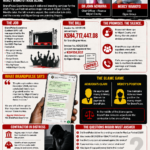
- Sh25,142,410.00 under Rental Lease Account No. 411200
- Sh18,447,747.47 under Cargo Account No. 103011
That pushes the total claim to Sh43,590,157.47.
This is not the kind of number you misplace in a drawer and forget about. It is not the sort of debt that appears because someone skipped one payment. It is the kind of debt that grows over time, sits there rotting, and only gets this big when a company is either deeply unable to pay or too comfortable to fear consequences.
That is the first problem for Mohamed Ali’s camp.
The second problem is even worse.
NAEEM SHAFIQ IS NOT A CASUAL NAME IN THIS STORY
If the name Naeem Shafiq Mohamed did not appear in this file, Mohamed Ali might have had room to distance himself and pretend the matter had nothing to do with him.
But Naeem’s name is right there in the centre of it.
The material identifies him as:
- a nominated MCA in Mombasa County Assembly under UDA
- a close confidant and personal assistant to Mohamed Ali
- and the largest shareholder in Somtrade Limited with 30 shares
That last part is the killer.
You cannot shout “I know nothing” when the biggest shareholder in the company is your own political aide and right-hand man. You cannot keep selling yourself as the clean crusader while the people who sit closest to you are buried in a Sh43.5 million port debt mess.
This is where Mohamed Ali’s anti-corruption brand begins to collapse under its own hypocrisy.
Because for years he has positioned himself as the man who sees dirt everywhere else. He has gone after opponents, mocked rivals, questioned government contracts and painted himself as the fearless outsider. But now the spotlight is not on some distant state corporation or county official he is attacking from a podium.
The spotlight is on his own camp.
And suddenly the noise has gone quiet.
THE COMPANY STRUCTURE MAKES THE STORY DIRTIER
The company’s ownership structure, as referenced in the screenshots, reads like the cast list of a political-commercial network rather than an ordinary private firm.
It places:
- Naeem Shafiq Mohamed at 30 shares
- Ibrahim Bagajo Karayu at 25 shares
- Mohamed Ibrahim Abdi at 25 shares
- Suleiman Ibrahim Surrow at 20 shares
That means Naeem is not just present. He is dominant.
And Mohamed Ibrahim Abdi’s presence makes the optics even worse. This is a former Mombasa Trade CEC, a man who understands county power, trade systems and port-facing business environments. Put him together with Mohamed Ali’s aide inside the same company, then add a Sh43.59 million KPA demand, and the result is a scandal that practically writes itself.
Because now the public is not just asking who owes KPA money. They are asking what kind of network was sitting behind Somtrade and how a company with that kind of political and administrative muscle still ended up drowning in debt.
HOW DO YOU OWE SH43 MILLION TO KPA IN A CASH-BASIS SYSTEM?
This is the question that makes the story truly poisonous.
According to the screenshots, KPA’s response to Somtrade’s plea for a payment plan was blunt. The authority reportedly reminded the company that KPA operates on a cash basis and does not offer credit facilities for the services it provides.
Read that again.
KPA says it does not operate a credit system.
So how did Somtrade, a company tied to politically exposed names, manage to accumulate Sh43,590,157.47 in arrears under an authority that says it does not extend credit?
That question should be setting off alarms all over Mombasa.
Because if KPA’s policy is cash-first, then a debt this large does not just appear by accident. It means one of two things happened. Either the company was allowed to continue occupying space and running cargo-related business despite mounting arrears, or enforcement was so weak, selective or compromised that the debt was allowed to balloon while everyone looked the other way.
Neither possibility is flattering.
Both are scandalous.
SOMTRADE REPORTEDLY BEGGED FOR A PAYMENT PLAN
The documents say Somtrade Limited wrote to KPA proposing payment plans for both the cargo and rental debts.
That is a crucial detail because it suggests the company was not denying the arrears. It was trying to survive them.
But KPA reportedly shut that door.
In the quoted letter, the authority is said to have told Somtrade that the debts were in contradiction to policy and also fell under the category of uncollectable debts due to the prolonged period. The company was then given seven days to clear the amount or face legal action.
That is devastating language.
When a state authority starts describing a debt as contradictory to policy and drifting into the territory of “uncollectable,” it means the file has already become toxic. It means the patience is gone. It means the authority believes it has been messed around for too long.
And once that letter lands, the problem is no longer private. It becomes public, political and reputational.
MOHA JICHO PEVU NOW HAS A CREDIBILITY CRISIS
Mohamed Ali’s biggest problem is not whether his name appears on the CR12. It is whether Kenyans believe he can still posture as a clean-handed fighter when a company tied to his closest aide is choking under a Sh43.5 million KPA debt.
That is the real crisis here.
Because politics is not just about legal ownership. It is about proximity, influence and trust. If your aide is the biggest shareholder in the company, if your former county ally is listed among the directors, if the debt sits under a major public authority in your political backyard, then you do not get to shrug and say, “That is not my problem.”
It is your problem because these are your people.
And if they are your people, then the public has a right to ask:
- Did you know Somtrade was in this mess?
- Did Naeem ever brief you on the debt?
- Did anyone in your office try to intervene?
- Did your camp believe the company could talk its way out of the arrears because of who was around it?
- Were there attempts to lean on KPA to buy time?
Those are fair questions. In fact, they are the minimum questions.
THE LOBBY GROUP ALLEGATIONS POUR PETROL ON THE FIRE
As if the debt itself was not enough, the screenshots also quote a member of a lobby group accusing Mohamed Ali of seeking “cheap publicity” while ignoring the support he allegedly received in the past.
The source goes further and claims Mohamed Ali, during the Ruto-Gachagua honeymoon period, was bulldozing procurement officers and finance staff and had received multiple favours.
These are serious allegations and should be treated as allegations unless independently proven. But politically, they are dynamite because they fit a narrative many Kenyans are already prepared to believe: that some leaders love playing rebel in public while quietly benefiting from the same systems they condemn.
The material also claims that videos and photographs exist showing Mohamed Ali confronting procurement officers and issuing what were described as stiff instructions.
If those materials exist and ever surface publicly, this story could explode beyond a debt scandal and become a broader investigation into political interference, procurement pressure and port-side influence.
That is why Mohamed Ali should not treat this as a passing social media storm. It has the ingredients of a much bigger problem.
FORMER TRADE CEC MOHAMED IBRAHIM ABDI ALSO HAS QUESTIONS TO ANSWER
Mohamed Ibrahim Abdi’s name in the company structure is not a footnote. It matters because he is not just any businessman. He is a former Trade CEC in Mombasa County, a man who understands how public systems, trade spaces and business corridors around the coast operate.
Once his name appears in a company with a lease arrangement involving KPA and a Sh43.5 million debt trail, the public is entitled to ask how the company got this deep into arrears and whether political confidence or administrative familiarity played a role in how long the debt was allowed to live.
A company can struggle. Businesses fail. Markets turn. That is normal.
What is not normal is when a company with politically connected names around it racks up tens of millions in arrears under a public authority that insists it does not offer credit. That is where the ordinary business explanation stops being enough.
THIS IS NOT JUST A DEBT. IT IS A WINDOW INTO A POLITICAL NETWORK
The easiest mistake here would be to reduce this story to “Company owes KPA money.”
That is too small.
This is really a story about power, access and contradiction.
It is about how a company linked to the inner circle of a loud anti-corruption politician ended up being chased for Sh43.59 million by one of the most important state authorities on the coast.
It is about how a personal assistant and political aide became the biggest shareholder in that company.
It is about how a former county trade boss sat in the same structure.
It is about how a lease arrangement and cargo accounts ballooned into a debt mountain under a cash-basis authority.
And it is about how, once the scandal surfaced, the man who usually has something to say about everyone else suddenly found himself with a very uncomfortable silence around his own camp.
KPA NOW HAS ITS OWN QUESTIONS TO ANSWER TOO
This scandal does not stop with Somtrade and Mohamed Ali’s associates. KPA itself must answer hard questions.
If the authority truly operates on a cash basis, how was a debt of this size allowed to accumulate?
At what point did the arrears become visible?
Who was supervising the lease and cargo accounts?
Was Somtrade allowed to continue benefiting from KPA facilities while the debt mounted?
Were warning notices issued early enough?
Did anyone inside KPA bend rules, delay enforcement or give the company breathing room it did not deserve?
These questions matter because public authorities do not just wake up one day and discover Sh43.5 million has vanished into arrears. There are statements, reminders, officers, supervisors, files and internal decisions along the way. That means this debt story may not only expose Somtrade’s financial trouble. It may also expose weakness or complicity inside KPA itself.
MOHAMED ALI CANNOT HIDE BEHIND TECHNICALITIES
At this point, the usual political tricks will not work.
Mohamed Ali cannot hide behind the line that “my name is not on the company.”
He cannot hide behind Naeem and pretend his aide’s business is none of his concern.
He cannot keep performing outrage against corruption elsewhere while acting like Sh43.59 million tied to his inner circle is a minor misunderstanding.
He owes the public a clean explanation.
He needs to say whether he knew about Somtrade’s debt. He needs to explain the nature of Naeem’s role in the company. He needs to clarify whether he ever used his office, contacts or influence to assist the company in any way around KPA. And Naeem Shafiq must explain how a company in which he is the largest shareholder sank this deep into debt under a public authority.
Until that happens, every anti-corruption speech Mohamed Ali gives will sound hollow.
Because right now, the public is not looking at his words.
They are looking at a Sh43,590,157.47 debt notice, a company tied to his inner circle, and a very ugly question hanging over his political future:
Was Moha Jicho Pevu fighting corruption, or just fighting other people’s corruption while his own camp built a debt scandal at the port?