


Last Updated on January 4, 2026 by courtnews reporter
In a lawsuit that could redefine Kenya’s control over its strategic state assets, Busia Senator Okiya Omtatah has accused the government of quietly advancing a secret International Monetary Fund (IMF)–linked plan to privatise Kenya Pipeline Company (KPC) without public participation or parliamentary approval.
Filed at the High Court on January 2, 2026, the constitutional petition alleges foreign-driven economic decision-making, massive accountability gaps, and violations of Kenya’s Constitution, placing billions of shillings in public wealth at risk.
At the centre of the dispute is Kenya Pipeline Company, a profitable and strategic state monopoly that plays a central role in Kenya’s fuel security.
Secret IMF Deal and the Battle for Kenya Pipeline Company
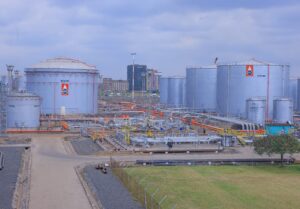
The petition was lodged by Omtatah alongside Bernard Muchiri Muchere and Naomi Nyakerario Misati, challenging the government’s plan to sell 65 per cent of Kenya Pipeline Company through an Initial Public Offering (IPO) by March 2026.
According to the petitioners, the proposed privatisation is not driven by public interest or economic necessity, but by pressure exerted by the International Monetary Fund as part of loan conditionalities imposed on Kenya.
The lawsuit describes the alleged deal as a “secret IMF pipeline arrangement”, accusing the government of ceding economic sovereignty and bypassing constitutional safeguards on public finance, governance, and citizen participation.
IMF Pressure or Sovereign Policy?
A central pillar of the case is the assertion that the privatisation of KPC is not a sovereign policy decision made by the people of Kenya through their constitutional institutions.
Instead, the petition alleges that the move is anchored in IMF conditions requiring Kenya to reduce its footprint in state-owned enterprises as part of debt restructuring and fiscal consolidation.
The petitioners argue that such external influence violates constitutional provisions that vest sovereignty in the people and require economic decisions of national importance to be made transparently and democratically.
“This is not a Kenyan policy choice—it is economic coercion,” the petition effectively argues.
A Profitable Monopoly Under Threat
The petition highlights that Kenya Pipeline Company remains wholly government-owned and financially robust.
In 2024 alone, KPC reportedly:
-
Posted a profit of KSh 6.87 billion
-
Paid KSh 7 billion in dividends to the National Treasury
The petitioners question the logic of selling a highly profitable strategic monopoly to plug short-term debt gaps, warning that such a move violates principles of prudent public finance and long-term national planning.
They argue that surrendering majority control of KPC could:
-
Undermine national fuel security
-
Expose Kenya to private interests with minimal public accountability
-
Lock citizens out of a critical economic artery
Billions Unaccounted For
Beyond the proposed sale, the petition raises serious concerns over KSh 97 billion in retained earnings and depreciation reserves at Kenya Pipeline Company that are allegedly unaccounted for.
These funds, accumulated over years of operation, represent public wealth, yet their current status remains unclear.
The petitioners argue that before any privatisation can be contemplated, the government must:
-
Fully account for the funds
-
Explain why a cash-rich company is being positioned for sale
-
Address potential historical financial mismanagement
They warn that privatising KPC without resolving these questions could mask past governance failures while transferring unresolved liabilities to the public.
Alleged Flawed Process and Legal Shortcuts
The lawsuit also attacks the process used to advance the privatisation agenda, accusing the government of multiple constitutional breaches.
Key allegations include:
-
Lack of public participation, contrary to constitutional requirements
-
Irregular appointments to the Privatisation Commission, undermining its independence
-
Parliament’s reliance on a Sessional Paper instead of substantive legislation to approve the plan
The petition argues that a decision of this magnitude—disposing of a strategic national asset—cannot lawfully be implemented through policy papers or executive action.
Parliament Accused of Abdicating Its Role
Omtatah and his co-petitioners fault Parliament for failing to exercise meaningful oversight, accusing lawmakers of rubber-stamping an executive-driven agenda with far-reaching consequences.
They argue that Parliament’s actions—or inaction—have enabled the executive to sidestep constitutional checks and balances, weakening accountability over public assets.
Orders Sought From the Court
In their prayers, the petitioners ask the High Court to:
-
Declare the entire KPC privatisation process unconstitutional
-
Quash all notices, approvals, and decisions relating to the sale
-
Permanently bar any future attempt to privatise Kenya Pipeline Company
-
Reinforce constitutional limits on foreign influence in public finance
Notably, the petitioners are not seeking personal compensation, describing the case as pure public interest litigation aimed at safeguarding assets owned collectively by Kenyans.
High-Stakes Case With National Implications
If the High Court sides with Omtatah and his co-petitioners, the ruling could:
-
Halt the alleged secret IMF pipeline deal
-
Redefine the role of foreign lenders in Kenya’s economic policy
-
Strengthen constitutional protections over state assets
-
Set a powerful precedent on executive power and public finance
Either way, the case has already ignited a national reckoning over who controls Kenya’s most valuable state enterprises—and in whose interests they are managed.
Kenya Court News Today – Live High Court & DPP Updates click here 👉 /kenya-court-news-today