

Last Updated on January 15, 2026 by courtnews reporter
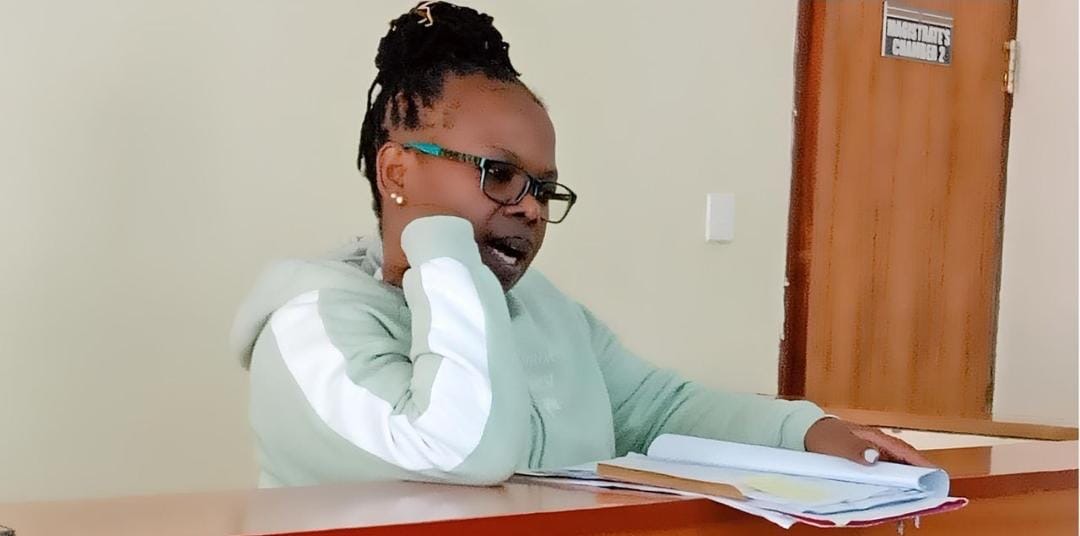
In a case that has stunned both political and legal circles, former Independent Electoral and Boundaries Commission (IEBC) commissioner Margaret Mwachanya has given chilling testimony detailing how she lost more than Sh6 million to an online cartel posing as spiritual healers operating under the notorious brand name “Mugwenu Doctors.”
What began as a seemingly harmless online consultation spiralled into a nightmarish web of deception, psychological manipulation, and financial ruin, exposing a rapidly growing underground industry of digital witchcraft scams thriving in plain sight.
A Desperate Call That Triggered the Downfall
Mwachanya told the court that her ordeal began in early 2024, after repeatedly encountering an online advertisement promising “divine intervention” in securing a top government appointment.
At the time, she was vulnerable and hopeful. A former diplomat who once served as Kenya’s Deputy Ambassador to Pakistan, she paid an initial Sh3,000 consultation fee—a decision that would open the door to escalating demands.
“I was desperate,” she testified. “And they knew exactly how to exploit that desperation.”
That single phone call marked the start of a financial and emotional spiral that would leave her drained of millions.
From Herbal Remedies to Ritual Extortion
The scammers initially sold her a so-called herbal remedy for Sh12,500. Soon after, the demands escalated into bizarre rituals.
She was instructed to multiply her age (53) by four zeros, withdraw Sh530,000, and hand it over for a “ritual.” The cash was placed in a container, prayed over, and she was told to wait 21 days.
When she opened the container, the money had vanished.
Instead of alarm, the scammers offered reassurance—and demanded more.
-
Sh380,000 for “cleansing”
-
Sh1.8 million to unlock a box of “spiritual money”
-
Promises of Sh18.3 million, later inflated to Sh48 million, allegedly waiting for her
To maintain the illusion, the fraudsters staged elaborate performances involving incense, chanting, shadowy figures behind curtains, and fake elders allegedly from Tanzania.
The Final Ritual: Fire, Fear, and Flight
In what she now describes as the most traumatic moment, Mwachanya was instructed to throw her “spiritual box” into a bonfire. She was assured the money would appear in her bank account once the ritual was complete.
Instead, she was told to run for her life.
No money ever appeared.
What remained was financial loss, emotional trauma, and deep shame—a pattern common among victims of such scams.
Not an Isolated Case
Mwachanya is not alone.
In 2022, Kakamega Governor Fernandes Barasa was also linked to a similar fake witchdoctor scheme, where millions were allegedly lost in rituals tied to political success.
Despite public exposure, the networks behind these scams continue to operate online—unchecked, unregulated, and increasingly sophisticated.
The Rise of the Digital Witchdoctor
A simple online search reveals professionally designed websites, fake testimonials, stock images, and fabricated success stories linked to Mugwenu Doctors.
Experts say this is no longer traditional superstition, but a coordinated cybercrime enterprise exploiting:
-
Job seekers
-
Politicians
-
The sick
-
The emotionally vulnerable
Faith, fear, and ambition have been weaponised into a lucrative fraud model.
A Dangerous Signal From the Elite
That a former IEBC commissioner and a sitting governor could fall prey to such schemes has ignited public concern.
Analysts warn that the growing flirtation between politics and superstition undermines constitutional governance, meritocracy, and public trust.
If leaders entrusted with public institutions turn to witchcraft for advancement, critics ask, what message does that send to citizens?
Calls for Action and Regulation
As the case proceeds in court, pressure is mounting on:
-
Law enforcement agencies
-
The Communications Authority
-
Digital platforms
to shut down fake spiritual businesses operating online.
Victim advocates warn that for every high-profile case, thousands more suffer in silence, too ashamed or afraid to report their losses.
A Cautionary Tale for the Nation
Margaret Mwachanya’s story is more than a personal tragedy—it is a national warning.
Faith is not currency. Power cannot be summoned with candles. And no future is unlocked by fire and salt.
Because when the smoke clears and the rituals end, only the scammers walk away richer.
Kenya Court News Today – Live High Court & DPP Updates click here 👉 /kenya-court-news-today