

Last Updated on December 28, 2025 by courtnews reporter
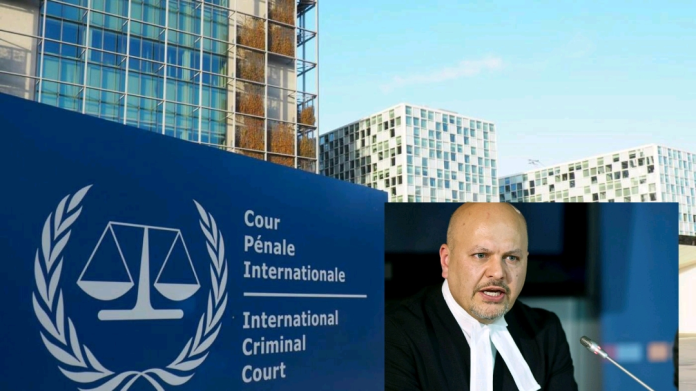
The International Criminal Court (ICC) has strongly rejected sanctions imposed by the United States government against two of its sitting judges, describing the move as a direct and flagrant attack on judicial independence and the international rule of law.
In a strongly worded statement, the Hague-based court condemned the designation of sanctions against Gocha Lordkipanidze and Erdenebalsuren Damdin, saying the measures undermine the very foundations of impartial international justice.
ICC: Sanctions Undermine Rule of Law
The ICC said it “deplores” the decision by the United States administration to target the two judges, warning that such actions threaten the independence of judicial institutions mandated by sovereign states.
“These sanctions are a flagrant attack against the independence of an impartial judicial institution which operates pursuant to the mandate conferred by its States Parties from across regions,” the ICC said.
The court emphasized that its judges and prosecutors are elected by States Parties under the Rome Statute, and not appointed by political actors.
Judges Targeted for Applying the Law
According to the ICC, the latest sanctions are part of a broader pattern. The court revealed that the two judges are among a group of officials targeted following an earlier designation of nine elected members of the Judiciary and the Office of the Prosecutor, drawn from all global regions.
“When judicial actors are threatened for applying the law, it is the international legal order itself that is placed at risk,” the ICC warned.
The court stressed that the judges were sanctioned solely for performing their judicial functions, a development it said sets a dangerous precedent for international justice systems.
Independence of the Court at Stake
The ICC said the sanctions undermine the principle of judicial independence, a cornerstone of international law and democratic governance.
The court cautioned that allowing political pressure to dictate judicial outcomes would erode accountability for the gravest crimes, including:
-
Genocide
-
Crimes against humanity
-
War crimes
“These measures are aimed at intimidating those tasked with upholding justice for victims of unimaginable atrocities,” the court said.
ICC Stands by Its Judges and Staff
In its statement, the ICC reaffirmed its full support for its judges, prosecutors, and staff, as well as victims who seek justice through the court.
“The ICC stands firmly behind its personnel and behind victims of unimaginable atrocities,” the statement read.
The court reiterated that it will continue to carry out its mandate independently and impartially, in full compliance with the Rome Statute, regardless of external pressure.
Solidarity From States Parties and Civil Society
The ICC also acknowledged the support and solidarity it has received from:
-
States Parties to the Rome Statute
-
Civil society organizations
-
International human rights advocates
“The ICC values the consistent demonstrations of solidarity of States Parties, civil society and all those who support the rule of law and justice for the victims of international crimes,” the court said.
The judges and prosecutors targeted by the sanctions, the court added, were democratically elected by member states and represent diverse regions of the world.
US–ICC Tensions Persist
The sanctions reflect longstanding tensions between the United States and the ICC, particularly over investigations involving nationals of non-member states.
Although the United States is not a party to the Rome Statute, the ICC maintains that its jurisdiction arises from crimes committed on the territory of member states or situations referred by the UN Security Council.
Legal analysts warn that targeting judges through sanctions risks weakening multilateral institutions and emboldening impunity for serious international crimes.
ICC Vows to Continue Its Work
Despite the sanctions, the court said it will press on with its work.
“The Court will continue its work, with all partners, to ensure the effective and independent implementation of its mandate,” the ICC stated.
The court emphasized that justice for victims of international crimes remains its central mission, and no external pressure will deter it from fulfilling that responsibility.
Wider Implications for Global Justice
The ICC warned that the sanctions could have far-reaching consequences beyond the court itself, potentially discouraging judges, prosecutors, and investigators from undertaking sensitive cases.
Legal experts note that if judicial officers can be sanctioned for applying the law, the integrity of the entire international legal system is put at risk.
As global scrutiny intensifies, the standoff raises critical questions about:
-
Respect for international judicial institutions
-
Protection of judicial independence
-
The future of accountability for international crimes
Kenya Court News Today – Live High Court & DPP Updates click here 👉 /kenya-court-news-today