

Last Updated on December 28, 2025 by courtnews reporter
The High Court has handed Kenya Electricity Transmission Company Limited (KETRACO) a major legal reprieve after issuing orders blocking any payment or transfer of public funds to the Spanish firm Inabensa Enerji A.Ş over a disputed infrastructure deal.
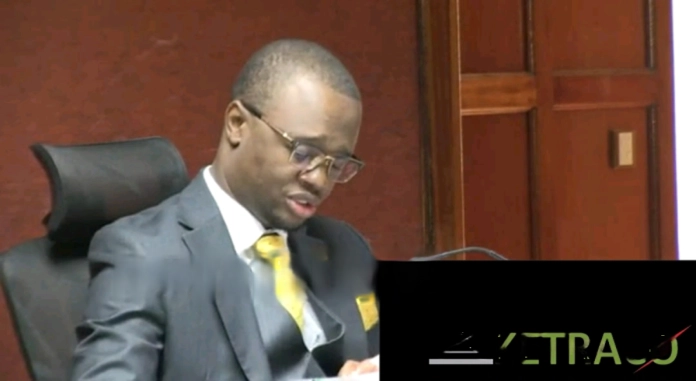
In a strongly worded ruling, Bahati Mwamuye restrained KETRACO, its board of directors, the Cabinet Secretary for Energy, the Cabinet Secretary for the National Treasury, and the Attorney General from authorising, approving, processing, facilitating, or effecting any release, remittance, transfer, or disbursement of public funds—whether directly or indirectly—in favour of Inabensa Enerji A.Ş or any related entity.
Sweeping Orders Issued by the Court
Justice Mwamuye ordered that the restraint applies jointly or severally, and extends to actions undertaken by officers, agents, servants, or any other persons acting on behalf of the named State entities.
In addition, the court directed KETRACO and all relevant government offices to collate, preserve, and secure all records, including approvals, instructions, correspondence, payment instruments, and both internal and external communications connected to the disputed payment.
Petition Filed by Consulting Firm
The ruling follows a constitutional petition filed by Lalashe Consulting, which sought to stop the government from releasing billions of shillings to Inabensa Enerji A.Ş over what it termed a botched project in which no work was done and no public infrastructure delivered.
The consulting firm urged the court to suspend any payments pending the hearing and determination of the petition, warning that the release of funds would amount to unconstitutional dissipation of public resources.
Alleged Unconstitutional Expenditure
In its application, Lalashe Consulting asked the court to declare that any release of public funds in favour of the Spanish firm, in the absence of demonstrable value for money, is unconstitutional, unlawful, and void.
The firm further sought permanent orders barring the government from making any payments under the impugned contracts unless and until full constitutional compliance is demonstrated, including proof of value for money to the satisfaction of the court.
Personal Liability of Public Officers Raised
A key aspect of the petition is a request for the court to declare that any public officer who authorises or facilitates payment contrary to the Constitution shall be personally liable under Article 226(5) of the Constitution.
The consulting firm also asked the court to compel the government to preserve and produce all documents relating to the proposed payment, including approvals, instructions, and correspondence.
Reliance on Constitutional Principles
Lalashe Consulting argued that the threatened release of public funds violates Article 201 of the Constitution, which sets out the principles of public finance—openness, accountability, prudence, and responsible use of public resources.
“Expenditure without demonstrable public value offends Article 201 in its entirety,” the court heard.
The firm submitted that Article 201 must be read pari materia with Article 10, which entrenches national values such as integrity, transparency, accountability, good governance, and sustainable development.
“A decision to pay billions for a paper project violates both provisions simultaneously,” the petitioner argued.
Public Trust and Abuse of Office
The court was further told that the proposed payment offends Article 73, which provides that authority assigned to a State officer is a public trust that must be exercised in a manner that brings honour to the nation and promotes public confidence.
“Rewarding non-performance does the opposite,” the court heard.
The petition also cited Article 75, which prohibits conduct by public officers that undermines public trust or demeans public office, especially when read together with Article 73.
Enforcement Mechanism Under Article 226(5)
Lalashe Consulting emphasised that Article 226(5) is both preventive and punitive, designed to stop unconstitutional expenditure before it occurs, while also imposing personal liability on errant officials.
“Articles 201 and 226(5) must be read together. The former sets the principles of public finance; the latter supplies the enforcement mechanism. To ignore one is to render the other meaningless,” the court was told.
Supremacy of the Constitution
The consulting firm further argued that the threatened payment undermines Article 2 of the Constitution, which declares the Constitution supreme over all laws, contracts, and processes.
“No contract, claim, or administrative process can justify conduct that offends constitutional principles governing public finance,” the court heard.
Read cumulatively, Articles 1, 2, 10, 73, 201, and 226(5) establish that public officers are stewards—not owners—of public resources, and that stewardship is incompatible with monetising failure, the petition argued.
What Next
The conservatory orders will remain in force pending the hearing and determination of the petition, effectively shielding KETRACO from any immediate payment obligations to the Spanish firm.
The ruling marks a significant development in Kenya’s public finance jurisprudence, reinforcing judicial oversight over large-scale infrastructure payments and the personal accountability of public officers in the management of public funds.
Kenya Court News Today – Live High Court & DPP Updates click here 👉 /kenya-court-news-today