

Last Updated on December 18, 2025 by courtnews reporter
The family of the late Bunty Bharat Kumar Shah, a former director of the Bobmil Group of Companies, has moved to the High Court seeking Sh700 million in compensation from the Government of Kenya for what they term as a brutal and unlawful killing carried out by masked police officers eight years ago.
Shah was shot dead at his residence in Westlands, Nairobi, in an operation that was later acknowledged by senior police officials as a mistake.
Family Blames State for Unlawful Killing
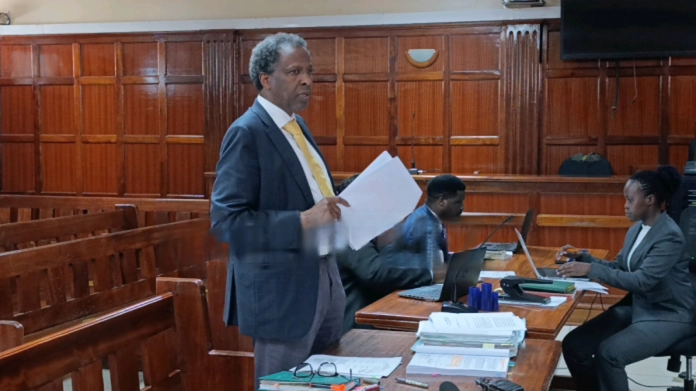
Appearing before Justice Chacha Mwita, the family—through Senior Counsel Ahmednasir Abdullahi—argued that the government must be compelled to pay punitive and exemplary damages to deter future extrajudicial killings.
Ahmednasir told the court that successive Kenyan governments have operated with impunity and disregard for human life, warning that unless courts impose heavy financial penalties, the culture of State-sanctioned violence will persist.
“When I speak of the government, my lord, I am not referring to the current regime alone. I am speaking of the Government of Kenya since 1963,” Ahmednasir submitted.
He told the court that on the night of the killing, about 40 police officers, some masked, stormed Shah’s home in Westlands and fired the fatal shot that ended his life.
Police Apology Came Too Late
Ahmednasir reminded the court that months after the killing, the then Inspector General of Police publicly apologised, effectively admitting wrongdoing.
However, he argued that the apology did little to remedy the constitutional violations committed against the deceased and his family.
“My lord, this government has refused to learn and obey the rule of law. Affirm it, punish the wrongdoer, compensate the victims, and restrain the State so that it learns to respect the lives of its citizens,” Ahmednasir urged the court.
Widow Seeks Support for Minor Son
The widow, Anjlee Parveen Kumar Sharma, is also seeking annual compensation of Sh18 million for the couple’s son until he attains the age of 18 years.
She told the court that while no amount of money can compensate her son for the loss of his father, the award would help mitigate the emotional, psychological, and social void left by Shah’s death.
“It will not compensate him for growing up without a father, without guidance, without shared memories, but it will help remedy the circumstances he now faces,” her lawyers submitted.
Additional Claims for Emotional and Financial Loss
The family is also seeking:
-
Sh20 million for emotional distress and psychological suffering endured by the widow
-
Sh277 million as compensation for loss of dependency and future earnings
The widow told the court that her late husband earned a monthly salary of Sh600,000, in addition to an annual bonus of about Sh500,000.
She argued that Shah’s life was violently cut short and that he could reasonably have continued working until the age of 70 or even 80 years, given his business background and professional standing.
Court of Appeal Already Declared Killing Unlawful
The compensation hearing follows a landmark ruling by the Court of Appeal, which earlier declared that Shah’s killing by police officers was unlawful and unconstitutional.
A three-judge bench comprising Justices Daniel Musinga, Mumbi Ngugi, and George Odunga found that the actions of the:
-
Attorney General
-
Inspector General of Police
-
Cabinet Secretary for Interior
violated the Constitution.
“A declaration is hereby made that the actions of the AG, IG, and Interior CS, through their agents and officers, in executing and killing the late Bunty Bharat Kumar Shah, were contrary to the Constitution,” the judges ruled.
The court specifically cited violations of:
-
The right to life
-
The right to parental care and guidance of Shah’s minor son
Matter Sent Back to High Court
While overturning an earlier High Court decision, the Court of Appeal directed that the matter be remitted back to the High Court solely for assessment of damages.
The appellate judges emphasised that constitutional courts have the authority to determine State responsibility for human rights violations, separate from criminal accountability.
They dismissed arguments by the State that compensation should await the conclusion of criminal investigations.
“There is no legal or practical barrier preventing police investigations or prosecution from proceeding concurrently with constitutional petitions,” the judges stated.
Victims, they added, are entitled to pursue multiple legal remedies at the same time, including:
-
Constitutional petitions
-
Tort claims
-
Criminal proceedings
Awaiting High Court Determination
Justice Chacha Mwita will now assess the quantum of damages payable, a decision that could set a significant precedent on State liability for extrajudicial killings and the scope of punitive damages against the government.
Kenya Court News Today – Live High Court & DPP Updates click here 👉 /kenya-court-news-today