

Last Updated on October 28, 2025 by courtnews reporter
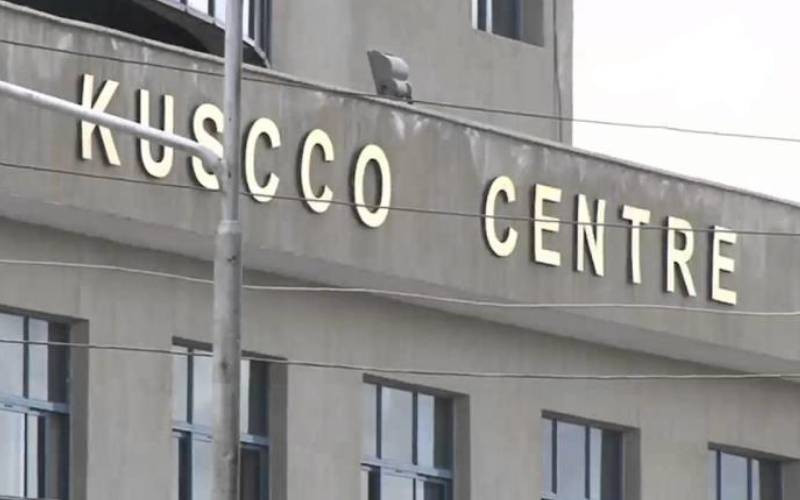
Detectives at Capitol Hill Police Station have launched an aggressive investigation into what is being described as one of the largest financial scandals in Kenya’s cooperative sector — a Sh13.3 billion financial hole at the Kenya Union of Savings and Credit Co-operatives (Kuscco).
The probe follows a formal complaint filed by lawyer Cecil Miller, acting for the embattled Kuscco board, alleging criminal destruction of documents, theft, and breaches of the Data Protection Act.
Sources close to the investigation confirmed that ten accountants linked to the previous administration have been grilled by detectives, with multiple arrests expected in the coming days.
A Multi-Billion Fraud Unfolds
The investigation stems from an explosive forensic audit conducted by PricewaterhouseCoopers (PwC), which revealed that Kuscco had been rendered technically insolvent with losses amounting to Sh12.5 billion and total financial exposure climbing to Sh13.3 billion.
According to Miller’s complaint, rogue insiders allegedly manipulated accounting records and destroyed crucial financial documents to cover their tracks.
“These revelations mark a decisive turning point,” said Lawyer Cecil Miller, representing the current Kuscco board. “The new leadership is determined to recover the stolen billions and restore public trust in an institution that represents the savings of thousands of Kenyans.”
The Vanishing Records
Investigators are zeroing in on missing financial records tied to transactions worth over Sh5.3 billion. According to documents filed by Miller & Company Advocates, repeated requests for proof of payment and original payment vouchers dating back to January 2025 have been unsuccessful.
Kuscco officials claim the records were either destroyed or disappeared during the chaotic management transition earlier this year.
In response, the cooperative has reached out to nine major banks—including Co-operative Bank, Absa, Gulf African Bank, NCBA, Consolidated Bank, Sidian, Family Bank, KCB, and National Bank—seeking duplicate transaction data to help reconstruct the missing paper trail.
DCI Investigators Trace the Paper Trail
The Directorate of Criminal Investigations (DCI) has reportedly assembled a multi-agency team, including digital forensics and handwriting experts, to recover deleted records and verify document authenticity.
One senior detective described the inquiry as “a complex web of internal collusion, record manipulation, and asset concealment”, implicating both mid-level accountants and former senior managers.
The PwC audit, now serving as a key evidentiary document, paints a picture of systemic mismanagement, possible embezzlement, and coordinated document destruction designed to frustrate future accountability efforts.
Sector-Wide Shockwaves
The revelations have sent shockwaves through Kenya’s cooperative movement, which serves as a financial lifeline to millions of Kenyans outside the formal banking sector.
More than 247 Saccos affiliated with Kuscco are anxiously awaiting the outcome of the probe amid fears of deposit exposure and governance collapse.
“If the forensic audit and subsequent investigations confirm deliberate document destruction, this could redefine accountability standards across Kenya’s cooperative industry,” warned one financial analyst.
Legal and Criminal Implications
Those implicated could face serious criminal charges, including:
-
Theft and conspiracy to defraud
-
Fraudulent destruction of records
-
Concealment of documents relating to financial loss
-
Violation of the Data Protection Act (2019)
If convicted, legal experts say the offences could attract lengthy prison sentences and hefty restitution orders under Kenya’s Penal Code and Economic Crimes Act.
Kuscco’s Road to Redemption
The current Kuscco management and board have pledged to fully cooperate with investigators and to pursue all legal channels to recover the missing billions.
“This is about restoring credibility,” Miller said. “The board is committed to full transparency, compliance with the Data Protection Act, and holding every individual accountable.”
Still, the road to financial recovery remains uncertain. With evidence allegedly destroyed and suspects accused of actively obstructing investigations, the process may take months—if not years—to resolve.
A Sector at a Crossroads
The Kuscco scandal underscores a deeper governance crisis in Kenya’s cooperative sector, where weak oversight, political patronage, and inadequate digital controls have enabled massive financial losses.
As detectives continue their marathon interrogations at Capitol Hill Police Station, the nation watches to see whether this investigation will finally bring accountability to a sector long plagued by silent fraud and cover-ups.
For now, the fate of billions in member savings—and the integrity of Kenya’s cooperative movement—hangs precariously in the balance.
Kenya Court News Today – Live High Court & DPP Updates click here 👉 /kenya-court-news-today