

Last Updated on October 9, 2025 by
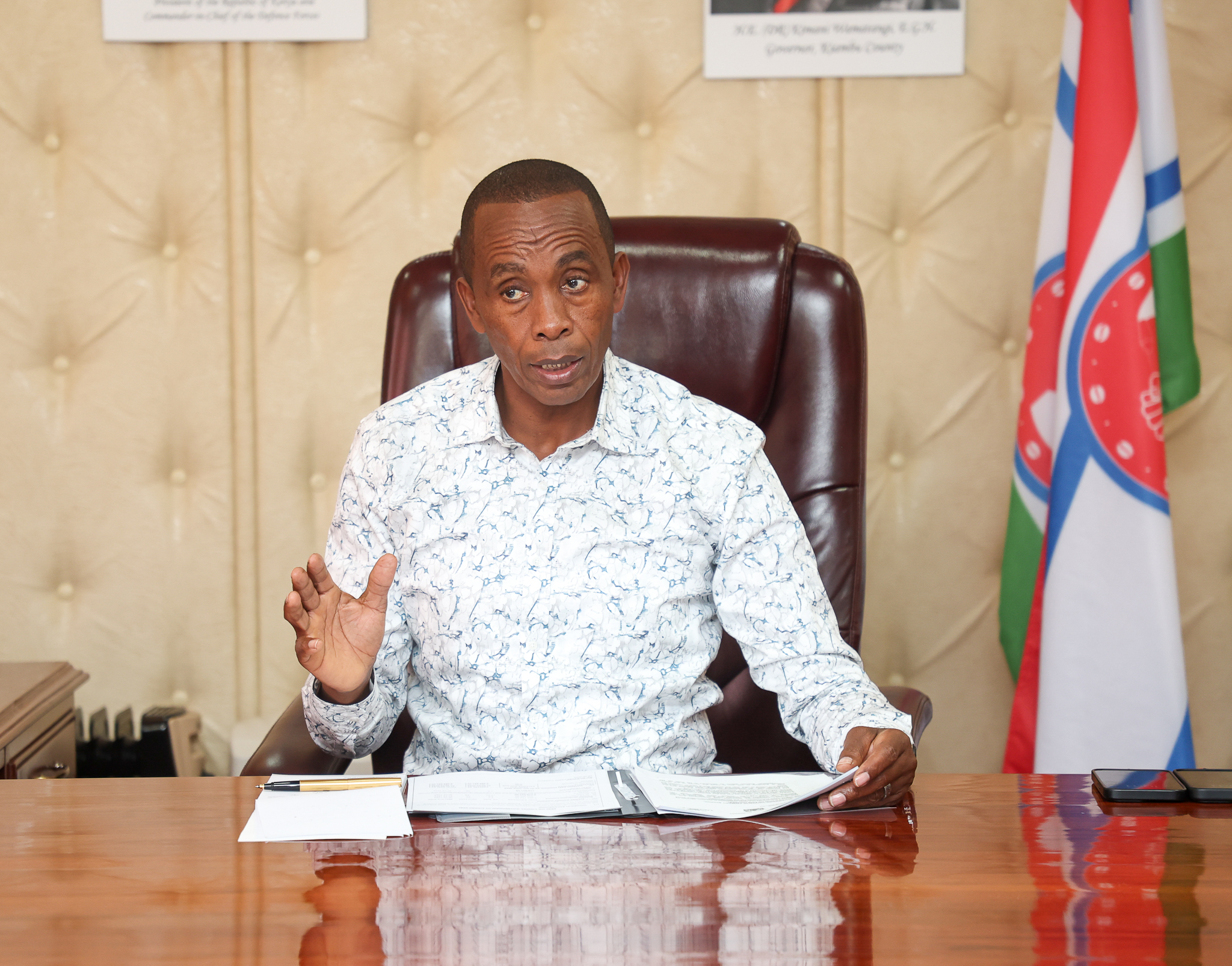
The High Court has once again extended conservatory orders stopping the Director of Public Prosecutions (DPP) and the Ethics and Anti-Corruption Commission (EACC) from arresting or prosecuting Kiambu Governor Kimani Wamatangi pending the hearing and determination of a petition he filed challenging his anticipated prosecution.
Justice Chacha Mwita, sitting at the Constitutional and Human Rights Division of the High Court in Nairobi, extended the protection orders until December 10, 2025, when he will issue further directions in the case.
The extension came after the DPP, represented by State Counsel Henry Arochi, requested additional time to file submissions, citing the need to comprehensively address issues raised in Wamatangi’s petition.
Governor Fears “Politically Motivated” Arrest
Governor Wamatangi moved to court earlier this year seeking to stop what he termed as a “targeted and politically driven prosecution” by the EACC. The agency has been investigating alleged links between the governor and several companies suspected of engaging in graft-related dealings with Kiambu County.
In his petition, the governor argues that the probe and imminent arrest violate his constitutional rights, asserting that he has no ownership interest in the companies under investigation.
Through his lawyer Stephen Ligunya, Wamatangi told the court that he had already filed and served his submissions in compliance with the court’s earlier directions.
EACC and DPP Seek More Time
Appearing for the EACC, Ms. Murugi confirmed receiving the governor’s submissions but requested additional time to file her responses, explaining that she had been unwell and only resumed work recently.
“I am sorry to both the court and my colleagues for not having filed responses. I have been unwell and only resumed work this week. I ask for two days to file my responses,” she told the court.
Justice Mwita granted both the EACC and the DPP 14 days to file their responses ahead of the December 10 mention date when the matter will be heard further.
Dispute Over Related Cases
During the proceedings, counsel for the DPP, Henry Arochi, argued that the issues raised in Wamatangi’s case overlapped with an earlier petition involving similar companies under investigation. He warned that allowing both cases to proceed simultaneously could lead to conflicting court decisions.
“If these cases proceed concurrently, this is likely to embarrass the court as decisions may be made differently,” Arochi submitted.
However, Wamatangi’s lawyer, Ligunya, countered that the governor had no connection to the earlier petition and was not a shareholder in any of the firms in question. He emphasized that his client was being unfairly dragged into a matter he was not party to.
Justice Mwita pressed Arochi to clarify whether the parties in both cases were identical. Arochi conceded they were not but insisted that the directors in question were the same individuals linked to both petitions.
EACC Application and Judicial Observations
Separately, the EACC had filed an application on August 8, 2025, seeking to transfer Wamatangi’s petition to the Anti-Corruption and Economic Crimes Division.
However, Justice Mwita observed that consolidation of cases could only occur if both matters were properly before the same court, warning that improper transfers could result in procedural confusion.
“One judge could approve a transfer while another declines, creating unnecessary procedural complications,” the judge cautioned. He further urged all parties to prioritize progress over delay.
The court will reconvene on December 10 for further directions, with the conservatory orders protecting Governor Wamatangi’s freedom remaining in place until then.