
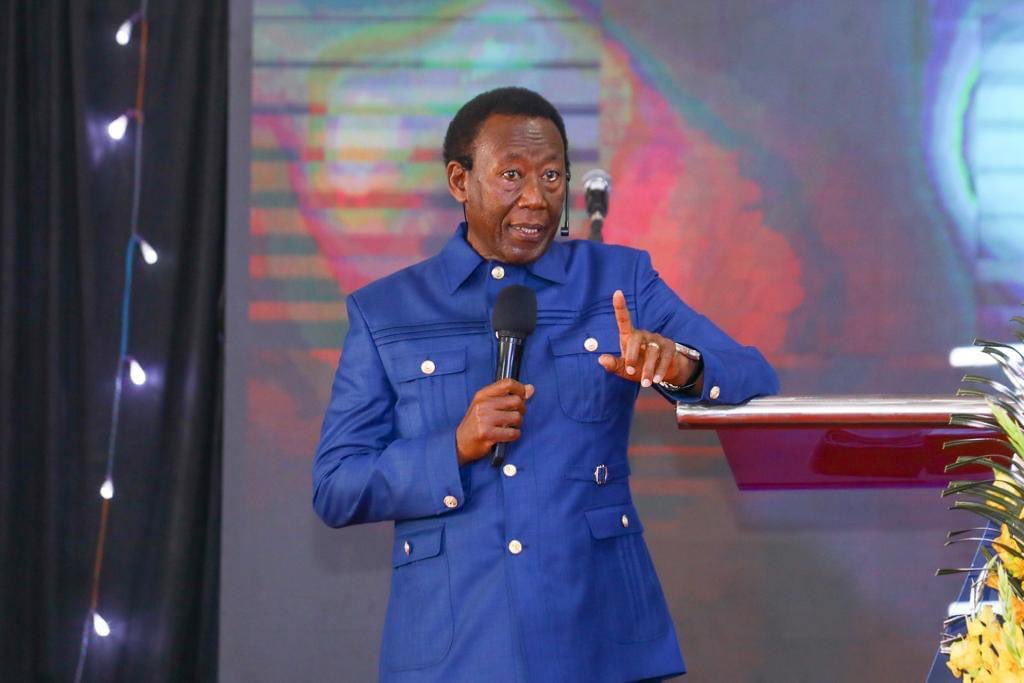
Bishop Mark Kariuki’s Deliverance Church Linked to Sh10B Imani Estate Land Fraud Scandal

Last Updated on September 22, 2025 by
Introduction
Kenya is reeling from what could be the country’s largest church-backed investment scandal. Court documents, victim testimonies, and public records reveal how thousands of congregants of Deliverance Church, led by Bishop Mark Kariuki, were entangled in a Sh10 billion land fraud scheme. The scandal weaponized religious trust and homeownership aspirations, echoing the infamous Goldenberg scandal of the 1990s.
The “Divine Opportunity” That Became a Nightmare
In 2014, during a Sunday service at Deliverance Church Kasarani, worshippers were introduced to what was billed as a God-given chance to own land. The project, Imani Estate in Ruiru, was presented as a 500-acre development marketed by Ukombozi Holdings Limited, the church’s commercial arm.
Plots measuring 50×100 were sold for Sh2.5 million to Sh4.4 million, and thousands rushed to invest—trusting their bishops and church elders. For many tenants in Kasarani, Zimmerman, Githurai, and Mwiki, this seemed like the breakthrough they had prayed for.
But by 2019, cracks appeared. Investors discovered that the land was under court dispute, and ownership documents were later declared null and void.
The Goldenberg Connection: Pattni and the Kanyotu Estate
Investigations revealed that the land belonged to Kangaita Coffee Estates, controlled by the late intelligence chief James Kanyotu. Following his death in 2008, the land became part of his contested estate, with High Court injunctions blocking any transactions.
Despite this, the property was sold to Trendsetters Investments Limited, linked to Kamlesh Pattni—the mastermind of the Goldenberg scandal. Trendsetters allegedly transferred it to Marriott Africa International, which then passed it on to Ukombozi Holdings, the church’s company owned by Bishop Kariuki, Bishop John Masinde, and associates.
Court testimony further revealed overlaps between Pattni’s companies and the entities that transacted the land, exposing a coordinated scheme of corporate deception.
Forensic Evidence: Forged Documents Exposed
Two forensic experts testified that key land transfer documents were forgeries. Letters of consent supposedly authorizing the sales were fabricated.
Justice Oguttu Mboya, in a July 10, 2025 judgment, declared the entire transaction fraudulent, saying:
“A fiduciary duty existed in this case, and the defendants breached that duty by failing to account fully for the sums received.”
This ruling nullified thousands of land titles tied to the Imani Estate project.

Victims’ Pain: Life Savings Lost
-
Michael Kamau, who invested Sh9 million in plots and built a Sh34 million maisonette, now faces demolition after his title was cancelled.
-
Stephen Mbugua, who paid Sh2.5 million for a plot and later built a house, discovered the property was tied up in court disputes.
-
Mercy Wanjiku, whose family paid Sh3 million, expressed shock that government-issued titles could later be revoked.
For many, loans taken from SACCOs and banks for the investments have left them in crippling debt.
Government Intervention: Titles Cancelled
On August 15, 2025, the government published Gazette Notice Number 11373, ordering the surrender of all titles linked to the subdivision of Land Reference 11261/76. The directive, signed by the Chief Land Registrar, affects thousands of unsuspecting homeowners.
The decision has left families devastated, their investments hanging in limbo, as political accusations fly—including claims of involvement against Lands CS Alice Wahome, which she has denied.
Bishops’ Silence and Systemic Failures
Despite repeated requests for comment, Bishop Mark Kariuki and Bishop John Masinde have remained silent. Their earlier endorsements of Imani Estate stand in stark contrast to their current public silence as victims demand accountability.
The scandal exposes Kenya’s systemic failures:
-
Land Registry flaws, where fraudulent transactions bypassed court orders.
-
Religious exploitation, as churches operate commercial entities without regulation.
-
Judicial loopholes, with overlapping cases that delay justice.
-
Due diligence failures, with congregants trusting religious leaders without verifying ownership.
Echoes of Goldenberg: Faith as a Tool of Fraud
Just as Goldenberg used government export schemes to defraud Kenya, the Imani Estate scandal weaponized religious authority to lure congregants. Both relied on forged documents, complex company structures, and exploitation of weak institutions.
The Road to Justice
Victims have secured a temporary three-month stay order as they fight in court. But with church leaders silent, Pattni’s companies claiming legitimacy, and the Kanyotu estate mired in succession battles, recovery remains uncertain.
For thousands of families, the Imani Estate has become a graveyard of shattered dreams—proof that when faith, fraud, and systemic failure intersect, ordinary citizens suffer the most.
Editorial Note
This report is based on court documents, official records, and victim testimonies. Deliverance Church leaders Bishop Mark Kariuki and Bishop John Masinde were contacted for comment but did not respond by publication time.