

Last Updated on January 14, 2026 by
Demolitions carried out near Nyayo National Stadium have ripped the lid off Nairobi’s long-running land scandals, exposing how power, privilege, and impunity intersect in the capital’s most contested spaces.
In a covert night operation, bulldozers moved in under heavy police guard and flattened businesses worth millions on land investigators say had been illegally converted from a railway reserve into private commercial use. The properties are now being linked to Kimani Wamatangi, reigniting explosive questions about land grabbing by powerful political figures.
Night Raid Leaves Businesses in Ruins
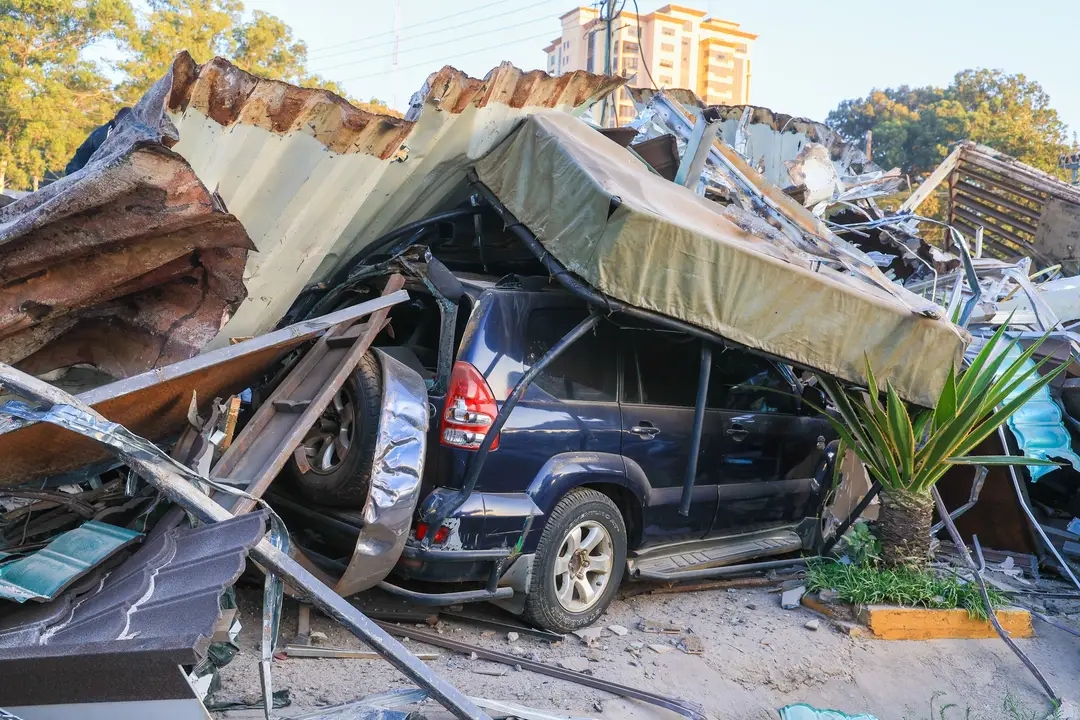
The demolitions took place on Tuesday night, January 13, along Douglas Wakiihiru Road, just behind Nyayo National Stadium. Heavy machinery descended after dark as armed police sealed off the area.
Bulldozers and excavators tore through permanent structures within hours. Car washes, carpet-cleaning businesses, eateries, and roadside enterprises were reduced to rubble. Vehicles were crushed in yards as shocked owners watched from a distance, blocked by police lines.
Traffic along Lang’ata Road slowed to a crawl as the operation unfolded, turning the area into a scene reminiscent of Nairobi’s darkest demolition crackdowns.
Railway Reserve Allegedly Turned Private Business Hub
Sources on the ground and documents reviewed by investigators indicate that the demolished structures sat on land reserved for the railway corridor. Despite its public status, the parcel had quietly morphed into a lucrative private business hub.
Investigations have linked the operations—particularly a car wash and carpet-cleaning business opposite the stadium—to Governor Kimani Wamatangi, raising fresh allegations that a sitting county boss benefited from land that should never have been privately developed.
The revelations have sparked outrage, with critics asking how public land could be commercialised for years without enforcement, only to be reclaimed when a major state project finally required the space.
Government Defends Demolitions, But Questions Persist
Government officials defended the night demolitions, citing an upcoming rail infrastructure project. The cleared corridor is expected to host a new train station linking Nairobi’s CBD to Nyayo Stadium and the planned Talanta Stadium.
Authorities insist that multiple eviction notices were issued before the operation. But business owners on the ground dispute this, saying the manner of execution—at night, under armed guard—suggests an effort to suppress resistance rather than ensure compliance.
Attempts by traders to protest were swiftly neutralised. Burning tyres briefly appeared on the road, but the machines never stopped.
A Familiar Story: Demolition, Silence, Rebuilding
This is not the first time the same location has been cleared.
In 2019, during the administration of former President Uhuru Kenyatta, the government demolished a car bazaar opposite Nyayo Stadium. That complex housed a restaurant, pharmacy, salon, boutique, and cosmetics shops. At the time, reports also linked the bazaar to Governor Wamatangi.
Authorities then said the structures sat on public land reserved for transport infrastructure.
Yet after the dust settled, the land did not remain vacant. New businesses quietly emerged on the same parcel—raising troubling questions about how demolished public land repeatedly finds its way back into private hands.
The latest night raid appears to have shut down those revived operations—at least temporarily.
Pattern of Selective Enforcement Fuels Anger
Critics argue the Nyayo demolitions highlight a pattern of selective enforcement:
-
Public land is grabbed and developed
-
Businesses operate for years, generating millions
-
Demolitions only happen when mega-projects demand space
-
Small traders suffer instant losses
-
Powerful beneficiaries face no immediate accountability
The outrage is compounded by similar scenes elsewhere in Nairobi. In Ngara, traders protested in October 2025 after their shops at Fig Tree Market were demolished to pave the way for housing projects. Developers cited expired leases; traders said they were valid.
The script is familiar: confusion, police-backed demolitions, livelihoods erased overnight
Land Wars, Power, and the Question of Accountability
What has angered Kenyans most in the Nyayo case is the alleged involvement of a sitting governor. The question being asked is blunt: Why do illegal developments linked to powerful figures survive for years—only to be demolished when the state finally needs the land?
The demolitions have once again laid bare the fault lines in Kenya’s land governance system, where enforcement appears delayed, uneven, and deeply entangled with politics.
As the rubble near Nyayo Stadium settles, one reality remains clear: Nairobi’s land wars are far from over—and accountability remains the missing piece.