

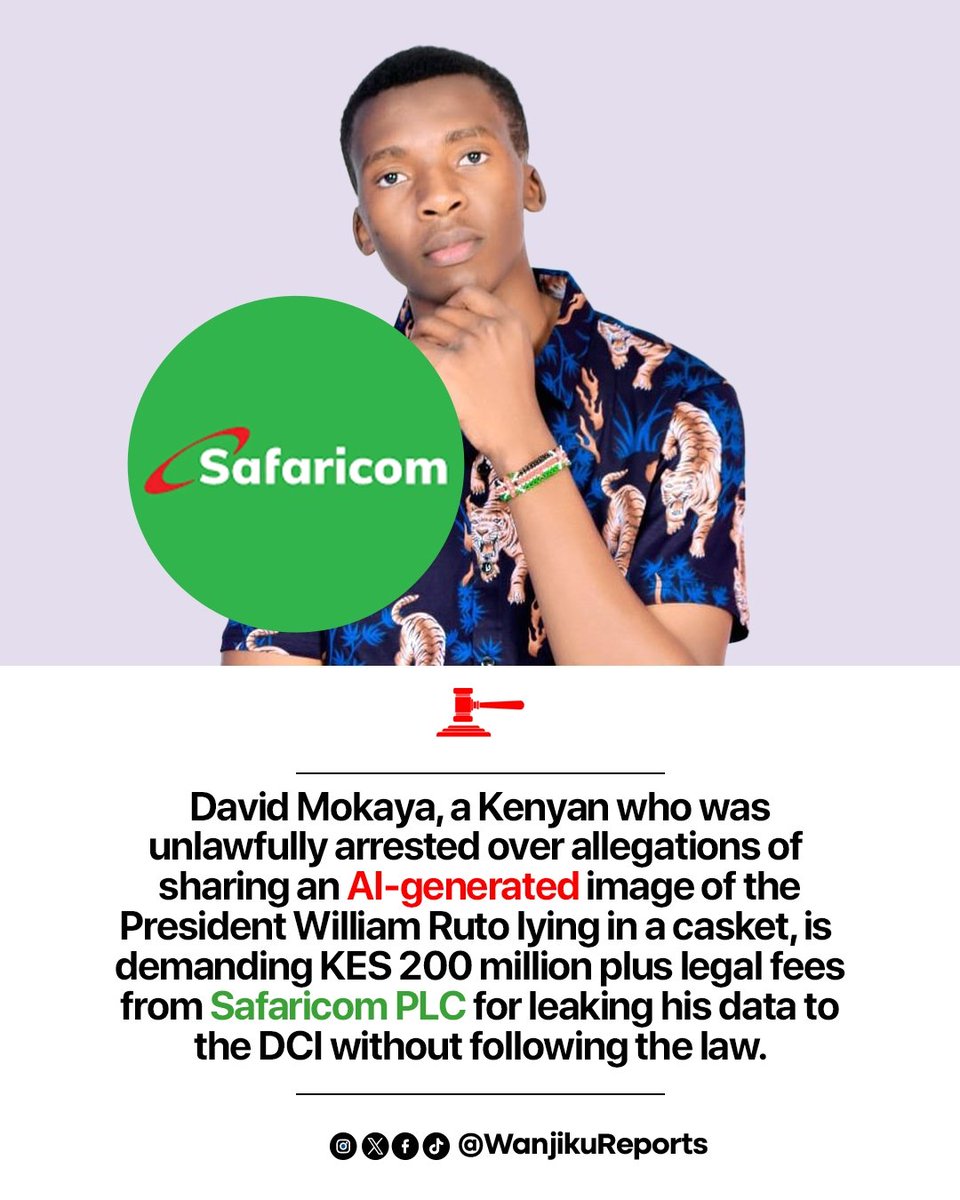
David Mokaya Safaricom Case: Student Sues Telecom Over Data Sharing
David Mokaya was a university student when police arrested him in November 2024.
Today, his case has turned into a major legal battle over digital privacy in Kenya.
The David Mokaya Safaricom case now raises serious questions about how telecom companies share customer data with investigators.
read:Benedict Kabugi Denies Safaricom Data Breach Allegations in 11.5M Subscriber Leak Case
Arrest Over Social Media Post
On November 18, 2024, officers arrested Mokaya, a student at Moi University.
Authorities accused him of publishing false information on X. The post allegedly claimed that President William Ruto’s body had left Lee Funeral Home.
Mokaya denied posting the message.
However, investigators linked the account to him. As a result, he appeared before the Milimani Law Courts in Nairobi.
The court released him on cash bail.
read:Safaricom Call Logs Link Officer Murangiri to CBD During Finance Bill Protests
A Case That Followed Him for a Year
The criminal case continued for more than one year.
During that time, Mokaya attended multiple court sessions. Consequently, he missed classes and spent money on transport and legal expenses.
On February 19, 2026, the trial court acquitted him.
The prosecution’s case collapsed.
Although he was free, one major issue remained unanswered.
How Did Police Trace Him?
During the trial, it emerged that Safaricom had shared his subscriber details with the Directorate of Criminal Investigations (DCI).
The shared information allegedly included:
-
Call records
-
Location data
-
Subscriber registration details
According to Mokaya, Safaricom provided this data without his consent.
He also claims there was no court order compelling the company to release it.
Therefore, he believes his constitutional right to privacy was violated.
Sh200 Million Demand to Safaricom
After the acquittal, Mokaya demanded Sh200 million in compensation.
He also asked Safaricom to admit liability.
However, the company rejected the demand.
Safaricom argued that cooperating with law enforcement agencies upon formal request does not amount to wrongdoing.
In addition, the company stated that the criminal court made no civil finding against it.
Constitutional Petition Filed
The David Mokaya Safaricom case has now moved to the constitutional court.
Mokaya has filed a petition seeking orders to stop Safaricom from sharing his personal data without:
-
His explicit consent, or
-
A valid court order
He argues that millions of Kenyans face similar risks.
According to him, any mobile phone user could become a suspect if their data is shared without strict safeguards.
Why This Case Matters
Kenya has a Constitution that protects privacy rights.
The country also has a Data Protection Act.
However, this case will test whether those protections apply strictly to private telecom companies.
The court must now decide whether Safaricom acted within the law.
The ruling could reshape digital privacy enforcement in Kenya.
For Mokaya, the fight is no longer just personal.
It is about defining what privacy means in the smartphone era
read:Safaricom, CBK Seek to Strike Out Paula Rogo’s M-Pesa Fraud Suit