Kenyan Businessman Mwangi Indicted in U.S. Over HIV Test Kit Theft and KEMSA Donor Fund Fraud

Last Updated on October 1, 2025 by
Eric Ndungu Mwangi
A Kenyan businessman is at the centre of a high-profile international fraud case that has drawn in investigators from Kenya, Guyana, and the United States, following allegations that he orchestrated the theft and diversion of HIV test kits and other donor-funded medical supplies meant for Kenyan patients.
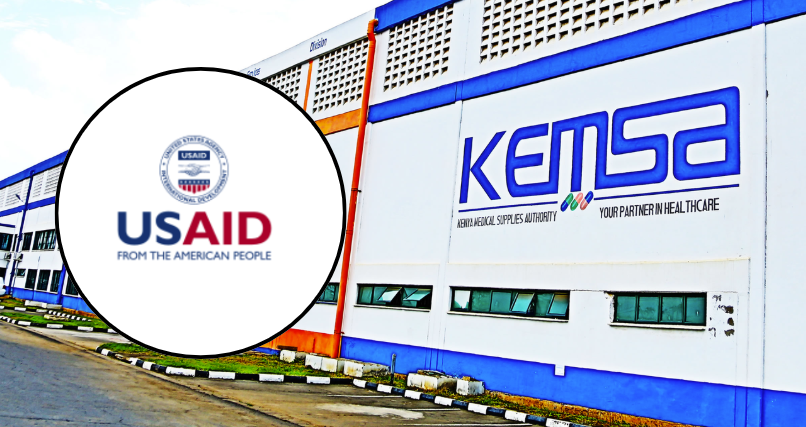
According to findings from a multi-year inquiry led by the Office of the Inspector General (OIG) at USAID, the suspect, identified as Mwangi, allegedly used his Nairobi-based company, Linear Diagnostics, to siphon medical commodities from the Kenya Medical Supplies Authority (KEMSA) supply chain as far back as 2014. These life-saving commodities—funded by American taxpayers and intended to strengthen Kenya’s fight against HIV/AIDS—were then sold on the black market.
Cross-Border Health Fraud Scheme
Investigators say Mwangi’s key accomplice was Davendra Rampersaud, a Guyanese businessman who allegedly provided a “ready market” for the stolen HIV kits. Rampersaud is said to have laundered the supplies into Guyana’s public health system by using Caribbean Medical Supplies Inc., his private company, to secure fraudulent contracts with the Guyanese Ministry of Health.
Records show that in 2015, Rampersaud obtained a “Letter of Authority” that allowed him to win a sole-source contract with Guyana’s health ministry, giving his operations an appearance of legitimacy. Behind the scenes, however, prosecutors claim that the commodities he supplied were illicitly diverted from Kenya.
Between 2015 and 2019, Mwangi allegedly received more than $177,000 (approximately Ksh22 million) in payments from Rampersaud for these stolen medical products. Prosecutors argue that the scheme deprived Kenyan HIV patients of critical supplies while defrauding U.S. taxpayers who had funded the commodities.
U.S. Prosecutors Condemn the Scheme
American authorities have described the cross-border investigation as unusually complex, requiring years of coordination between agencies on three continents.
Bryan Stirling, the U.S. Attorney for the District of South Carolina, condemned the actions, noting that the fraud undermined Kenya’s HIV response and weakened public trust in donor-funded programmes:
“The fraudulent dealings not only jeopardized Kenya’s healthcare objectives but also caused heavy losses to American taxpayers.”
The U.S. indictment highlights how donor-funded health programmes are vulnerable to manipulation when oversight systems fail, with KEMSA once again under scrutiny for weaknesses in its supply chain monitoring.
Arrests and Legal Proceedings
Mwangi was arrested in Kenya in February 2021 on theft and fraud charges linked to the scheme and remains in custody awaiting trial. However, with the unsealing of an indictment in South Carolina, he now faces potential extradition to the United States. If tried and convicted there, Mwangi could face up to 20 years in prison, heavy fines, and supervised release.
His alleged co-conspirator Rampersaud was arrested in January 2023 during a layover in Miami. He later pleaded guilty to conspiracy and theft charges before a federal judge in South Carolina. Rampersaud was sentenced to time served, three years of supervised release, and ordered to pay $84,000 in penalties.
Broader Implications for Kenya’s Health System
The case has ignited debate in both Washington and Nairobi, raising serious questions about how KEMSA’s systems allowed donor-funded commodities to be diverted for nearly five years without detection. It also highlights the risks of corruption and fraud in Kenya’s public health supply chain, which could jeopardize future international aid.
While Mwangi maintains the presumption of innocence until proven guilty, prosecutors argue that the indictment paints a damaging picture of systemic weaknesses in Kenya’s management of foreign-funded health programmes.
For now, all eyes remain on both the Kenyan and American courts, as the case threatens to become another major embarrassment for KEMSA and the country’s wider healthcare system.