

Last Updated on January 17, 2026 by courtnews reporter
Fear has settled deep in Kilimani, not loudly, but quietly. Doors are locked earlier than usual. Neighbours avoid eye contact. Conversations drop to whispers. Reporting crime has become an act of courage rather than civic duty.
At the centre of this unease is a shadowy criminal network residents say operates with near-total impunity — a group widely referred to as the Kilimani Gang. According to residents, the gang breaks into homes, coordinates with insiders, and walks free even when evidence is clear. The reason, they claim, is not weak law enforcement, but powerful political protection.
What unfolded at Sohail Court over the Christmas period has pulled back the curtain on how crime survives — and thrives — in one of Nairobi’s most affluent neighbourhoods.
A Christmas Break-In That Exposed a Network
The attempted break-in at Sohail Court was not random. Residents say it was carefully planned and internally coordinated.
According to multiple accounts, a security guard attached to a private security firm allegedly played a central role. Investigations by residents revealed that a carpenter who regularly does odd jobs within the court, a boda boda rider, and individuals linked to the estate’s management operations were all part of the plan.
The objective was simple: gain access using insider knowledge, remove valuables quietly, and disappear.
What shocked residents was not just the audacity of the crime, but the confidence with which it was carried out.
“They moved like people who knew nothing would happen to them,” one resident said.
Arrest Made — Then Everything Went Silent
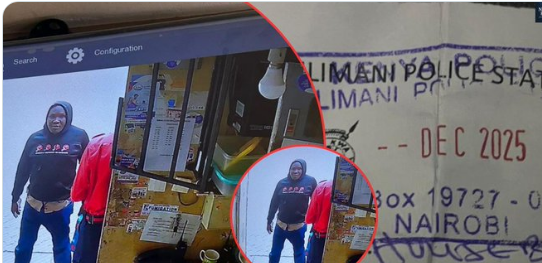
The matter was reported to Kilimani Police Station. Officers responded. The security guard was arrested. CCTV footage was reviewed.
Residents say the footage clearly showed:
-
Faces of suspects
-
Coordinated movement within the compound
-
Entry and exit points
-
Timelines matching witness accounts
By all measures, the case appeared strong.
Then, suddenly, everything stopped.
The arrested guard was released. No further arrests followed. Police stopped calling witnesses. Investigators went quiet. Meetings requested by residents were postponed or ignored. Estate managers avoided discussion.
What had looked like a straightforward criminal case dissolved into silence.
Alleged Political Interference
Residents say they soon learned why.
According to multiple sources within the estate, a prominent politician allegedly intervened. Officers were pressured. The case lost momentum. The suspects walked free.
No official explanation was given.
The silence, residents say, was deliberate.
“It wasn’t incompetence. It was power,” a tenant told this publication. “Procedure was crushed by influence.”
CCTV Evidence Ignored, Suspects Grow Bold
Perhaps the most chilling aspect of the case is what followed.
The carpenter, whose image residents say is clearly visible on CCTV, continues to loiter openly near the estate. Witnesses allege he boasts about his connections, claiming family ties to the same powerful politician accused of interfering in the case.
“He laughs. He says no one can arrest him,” a resident said.
That confidence has terrorised the neighbourhood more than the break-in itself.
When suspects roam freely despite evidence, residents say criminals become emboldened — and communities become helpless.
Families now double-lock doors even during the day. Tenants avoid unfamiliar faces. Trust between neighbours has collapsed.
Serious Questions for Security and Management
The incident has also raised uncomfortable questions for private security firms and property managers:
-
How did a trained security guard become part of a criminal plot?
-
Why were workers with access to the compound allegedly involved?
-
Why has no internal audit or disciplinary process been publicly disclosed?
So far, there have been no clear answers.
Police Under Fire for Inaction
Kilimani Police Station now finds itself at the centre of growing public anger.
Residents say officers recorded statements but failed to follow through. They allege pressure from “above” stalled the investigation. They claim fear — not law — now guides decisions.
Police have denied wrongdoing, but residents argue that inaction speaks louder than denials:
-
No follow-up arrests
-
No public updates
-
No witness protection
-
No reassurance to the community
The gang, residents say, continues to operate confidently in the shadows.
More Than a Crime — A System Failure
For residents, this is no longer just about stolen property. It is about the collapse of trust in institutions.
The Kilimani Gang represents a deeper problem: how corruption feeds crime. When powerful individuals shield suspects, criminals grow bolder. When police fall silent, fear fills the vacuum.
“This sends a message,” one resident said. “If you have connections, the law does not apply.”
Residents Demand Accountability
The community is now calling for urgent action:
-
Independent review of CCTV evidence
-
Reopening of the Sohail Court case
-
Investigation into alleged political interference
-
Accountability for police inaction
-
Protection for witnesses
Residents insist they will not remain silent forever.
A City at a Crossroads
Kilimani has long been seen as safe, modern, and secure. That image is cracking.
As long as crime is protected by influence rather than punished by law, residents warn that no neighbourhood is truly safe.
The question now facing Nairobi is stark:
Will power continue to excuse crime — or will justice finally catch up with the Kilimani Gang?
Until that answer comes, fear remains the uninvited resident in Kilimani.
Kenya Court News Today – Live High Court & DPP Updates click here 👉 /kenya-court-news-today